• Home
  • The Issue
    • Pushing Back
    • Legislation Defending the Electoral College
  • Regions & States
    • STATUS in the STATES
    • GREAT LAKES REGION >
      • ILLINOIS
      • Indiana
      • Michigan
      • Ohio
      • Wisconsin
    • MID-ATLANTIC REGION >
      • D.C.
      • Kentucky
      • Maryland
      • North Carolina
      • TENNESSEE
      • Virginia >
        • Virginia Lawmakers*
      • West Virginia
    • NEW ENGLAND REGION >
      • Maine >
        • Maine Lawmakers
      • MASSACHUSETTS
      • New Hampshire
      • Rhode Island
      • Vermont
    • NORTHEAST REGION >
      • Delaware
      • Connecticut
      • New Jersey
      • NEW YORK
      • Pennsylvania
    • NORTHWEST REGION >
      • Alaska
      • IDAHO
      • Oregon
      • Washington
    • Plains Region >
      • IOWA
      • KANSAS
      • Minnesota >
        • LAWMAKERS Minnesota
      • MISSOURI
      • Nebraska
    • Rocky Mountain Region >
      • Colorado
      • Montana
      • NORTH DAKOTA
      • SOUTH DAKOTA
      • Wyoming
    • South Central Region >
      • ARKANSAS
      • Louisiana
      • NEW MEXICO
      • OKLAHOMA
      • TEXAS
    • Southeast Region >
      • Alabama
      • Florida
      • GEORGIA
      • Mississippi
      • South Carolina
    • West Region >
      • Arizona
      • California
      • Hawaii
      • Nevada
      • Utah
  • Resources
    • Good Books
    • Speakers Available
    • Handouts
    • Memes You Can Use
    • Tara Ross
    • Trent England
  • 'Publius' Blogs
    • Letters from Roberta
    • Opinion by John
    • Guest Columns
  • Take Action
    • Become a Leader
    • Volunteer Team
  • Free Newsletter
  • Contact Us
    • Leaders Contact Form
  • Donation
KEEP OUR 50 STATES
  • Home
  • The Issue
    • Pushing Back
    • Legislation Defending the Electoral College
  • Regions & States
    • STATUS in the STATES
    • GREAT LAKES REGION >
      • ILLINOIS
      • Indiana
      • Michigan
      • Ohio
      • Wisconsin
    • MID-ATLANTIC REGION >
      • D.C.
      • Kentucky
      • Maryland
      • North Carolina
      • TENNESSEE
      • Virginia >
        • Virginia Lawmakers*
      • West Virginia
    • NEW ENGLAND REGION >
      • Maine >
        • Maine Lawmakers
      • MASSACHUSETTS
      • New Hampshire
      • Rhode Island
      • Vermont
    • NORTHEAST REGION >
      • Delaware
      • Connecticut
      • New Jersey
      • NEW YORK
      • Pennsylvania
    • NORTHWEST REGION >
      • Alaska
      • IDAHO
      • Oregon
      • Washington
    • Plains Region >
      • IOWA
      • KANSAS
      • Minnesota >
        • LAWMAKERS Minnesota
      • MISSOURI
      • Nebraska
    • Rocky Mountain Region >
      • Colorado
      • Montana
      • NORTH DAKOTA
      • SOUTH DAKOTA
      • Wyoming
    • South Central Region >
      • ARKANSAS
      • Louisiana
      • NEW MEXICO
      • OKLAHOMA
      • TEXAS
    • Southeast Region >
      • Alabama
      • Florida
      • GEORGIA
      • Mississippi
      • South Carolina
    • West Region >
      • Arizona
      • California
      • Hawaii
      • Nevada
      • Utah
  • Resources
    • Good Books
    • Speakers Available
    • Handouts
    • Memes You Can Use
    • Tara Ross
    • Trent England
  • 'Publius' Blogs
    • Letters from Roberta
    • Opinion by John
    • Guest Columns
  • Take Action
    • Become a Leader
    • Volunteer Team
  • Free Newsletter
  • Contact Us
    • Leaders Contact Form
  • Donation

Letters from Roberta

Roberta Schlechter
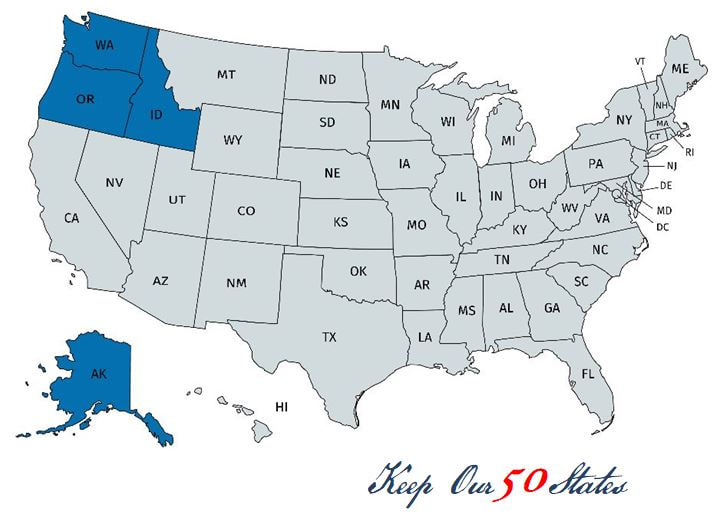
Keep Our ​50 States
Volunteer NW Region Director
Oregon


Roberta Schlechter is a former legislative staffer in Oregon and Northwest Region (Alaska, Idaho, Oregon & Washington) Director of the Michigan-based KEEP OUR 50 STATES. She has advocated against the National Popular Vote since 2008. Opinions expressed are exclusively those of the Author.


Picture
Roberta Schlechter
Click the Headline of any article to open it and make it available for download.​

​To leave your COMMENT on any of Roberta's Letters, double-click the Letter Title, and then leave your comment on the form that appears on the next screen.
Contact Roberta Schlechter
'Letters from Roberta' Blog posts
​Copyright © 2021-2024, Roberta Schlechter

Sovereign States - Equal Applications of Laws

1/29/2024

0 Comments

 
Picture
VERMONT
Vermont Laws vs. Texas Laws

Here’s something to ponder: Is the tiny State of Vermont equally self-governing as the
ginormous State of Texas? Answer carefully, as it is central to how our country operates,
including how we elect our president.

Do laws passed by the Vermont legislature apply equally to people in Vermont, as laws
passed by the Texas legislature apply to Texans? Suppose Texas doesn’t like a Vermont
law. Could they call a special election over the question? What if everyone in Texas
voted “No.” Would Vermont need to care?

Can a national voter base block a Vermont law?
But wait, what if all 49 States —millions of people not from Vermont—voted to block the
Vermont law? Would it have any force or application? Why not?  The Answer is: State
autonomy... or a term that some may find triggering...’sovereignty.’

Webster’s defines “sovereignty” as “autonomy” and “self-governance,” among others.
We operate in America via federalism, a formal power sharing among the States and
between States and the central government, created when the States ratified the
Constitution and reinforced by its checks and balances. This infrastructure has multiple
integrated layers of operation.

In Federalist #39, Publius (James Madison) writes, “... The proposed Constitution … is, in
strictness, neither a national, nor federal Constitution, but a composition of both. In its
foundation, it is federal, not national; in the sources from which the ordinary powers of
government are drawn, it is partly federal, and partly national; in the operation of these named and listed powers, it is national, not federal; in the extent of them, again, it is federal, not national;
and, finally, in the authoritative mode of introducing amendments, it is neither wholly
federal, nor wholly national.“

The Constitution is designed to protect Minorities from Majorities
In other words, the way America operates doesn’t lend itself to hasty judgments, even by,
or especially by, the ‘majority.’ And when we refer to a “majority” it’s according to
context. A presidential election, for example, isn’t like a vote for school superintendent.
What the Electoral College does is place the election of the CEO of the American
Federation into ALL 50 States. The only ‘majority’ that counts is the majority of State
electoral votes. The Electoral College also safeguards vote tabulations in each State from
controversies in any other state. Remove the Electoral College and transparency
becomes a thing of the past.

A Collusion Agreement in the works
So, where is this all leading? Since 2005 a group has been pitching something they call the
“National Popular Vote Interstate Compact” or NPVIC. Sixteen (16) State legislatures, plus DC of course, have signed on. It proposes to confiscate the votes of State presidential electors and hand them over
to the winner of the most votes nationally. The Compact would take effect when the number of NPVIC members’ electoral votes equals or exceeds 270, the number of votes needed to elect a president.

To date, seventeen (17) deep blue jurisdictions (including mine, Vermont and DC, of course) have joined the Compact.  Here’s where it gets complicated. The NPVIC legislation has been presented to all fifty (50) State legislatures at least once.  consistently been voted down in 29 equally autonomous States. In another sic (6) states the bill has failed to even get out of
committee. That’s thirty-five (35) anti-NPVIC States, three of whom have enshrined the Electoral
College in their State constitutions.

No legal challenges have yet been filed because the Compact has not taken effect. But what
if it did?

Could we really expect the courts to decide that sixteen or more (16+) autonomous States overrule thirty-fice (35) other autonomous States? Look to the Constitution for clues. Article V stipulates the
process for amending the document, which also directs the behavior of the Electoral
College in Article II (later clarified in Amendment 12). For the States to even discuss amending the
Constitution requires approval by two-thirds of Congress, or two-thirds of the States,
calling for such action. If an amendment change is proposed, three-fourths of Congress,
or 38 States, must approve the change. Where’s the evidence that this is forthcoming?

States elect the President. There is no uniform national popular vote!
But let’s get dreamy and assume the scheme was actually cleared to operate. What
then? If your State joins the Compact and uses Ranked Choice Voting, your vote
tabulations would crash and burn. There’s been talk of California allowing non-citizens
to vote. Under the Electoral College, a State could allow dogs and cats to vote without
changing the state’s electoral influence. But remove the Electoral College as a force of
law, and it’s a whole new ballgame. How might other States respond to the California
scheme?

Think outside the box. How many and varied combinations of lawsuits can one
imagine? And how many years might it take to adjudicate this chaos in the courts?
All the flack about inequity and the founders’ motives won’t matter in the midst of
extreme chaos.

Meanwhile, tiny little Vermont might want to reconsider whether its
citizens would be comfortable having their autonomy swallowed up into some deep and
murky national stew.

Roberta Schlechter
Volunteer NW Region
Michigan-based 'KEEP OUR 50 STATES'
Portland, OR

0 Comments


Leave a Reply.

    Picture

    Roberta SchlechTer

    FIFTEEN YEARS AGO,  when I first learned about the National Popular Vote Interstate Compact, I knew I needed to work hard against it and help inform lawmakers about the pitfalls of this Agreement among a few States.

    Having served as a legislative staffer and done lots of writing, I dove in.
    ​
    Today it’s WONDERFUL to be part of a vigorous TEAM that educates, encourages, equips and inspires people to jump in, to keep learning and to continue the campaign to defeat NPV. 
        - Roberta Schlechter
    ​

    I hope this page helps you to write letters to lawmakers or posts on social media. One piece of advice is to aim for a total of 300 words.
     
    On this page you will find:
     - Helpful Links
     - A sample “Don’t support NPV” letter 
     - Intros & conclusions for bills to 1) support the Electoral College and 2) Exit the NPV Compact 
     - Sample addendum to attach to legislative emails: additional facts and perspective about our election infrastructure, the Electoral College and NPV
     - Easiest ways to capture lawmaker email addresses into an email.

    ​YOU ARE WELCOME to use or adapt any statements made here for your own lobbying efforts.


    ​Roberta is the Northwest Region Director (Volunteer) for the 'Keep Our 50 States' grassroots group.

    Picture

    Archives

    October 2024
    September 2024
    August 2024
    May 2024
    April 2024
    March 2024
    February 2024
    January 2024
    December 2023
    November 2023
    October 2023
    September 2023
    August 2023
    July 2023
    June 2023
    May 2023
    April 2023
    March 2023
    February 2023
    March 2021
    February 2021

Picture
Website Copyright © 2017-2025, Keep Our 50 States and John J. Crawford. All rights reserved.
  • Home
  • The Issue
    • Pushing Back
    • Legislation Defending the Electoral College
  • Regions & States
    • STATUS in the STATES
    • GREAT LAKES REGION >
      • ILLINOIS
      • Indiana
      • Michigan
      • Ohio
      • Wisconsin
    • MID-ATLANTIC REGION >
      • D.C.
      • Kentucky
      • Maryland
      • North Carolina
      • TENNESSEE
      • Virginia >
        • Virginia Lawmakers*
      • West Virginia
    • NEW ENGLAND REGION >
      • Maine >
        • Maine Lawmakers
      • MASSACHUSETTS
      • New Hampshire
      • Rhode Island
      • Vermont
    • NORTHEAST REGION >
      • Delaware
      • Connecticut
      • New Jersey
      • NEW YORK
      • Pennsylvania
    • NORTHWEST REGION >
      • Alaska
      • IDAHO
      • Oregon
      • Washington
    • Plains Region >
      • IOWA
      • KANSAS
      • Minnesota >
        • LAWMAKERS Minnesota
      • MISSOURI
      • Nebraska
    • Rocky Mountain Region >
      • Colorado
      • Montana
      • NORTH DAKOTA
      • SOUTH DAKOTA
      • Wyoming
    • South Central Region >
      • ARKANSAS
      • Louisiana
      • NEW MEXICO
      • OKLAHOMA
      • TEXAS
    • Southeast Region >
      • Alabama
      • Florida
      • GEORGIA
      • Mississippi
      • South Carolina
    • West Region >
      • Arizona
      • California
      • Hawaii
      • Nevada
      • Utah
  • Resources
    • Good Books
    • Speakers Available
    • Handouts
    • Memes You Can Use
    • Tara Ross
    • Trent England
  • 'Publius' Blogs
    • Letters from Roberta
    • Opinion by John
    • Guest Columns
  • Take Action
    • Become a Leader
    • Volunteer Team
  • Free Newsletter
  • Contact Us
    • Leaders Contact Form
  • Donation